

CELESTIAL CHATBOX: Open AI’s latest model, GPT-6 Astra, continues the company’s space-based naming convention.
Photo courtesy of iblnews.org
Within just three months, the intense strides AI has made have raised considerable doubts about the future of humanity and AI’s role in society. AI labs such as OpenAI and Anthropic have solved the once-inconceivable Navier-Stokes equations and incited an autonomous chatbot jailbreak thanks to the exponential growth of their frontier AI models. While these groundbreaking developments have led to excitement regarding the untapped capabilities of highly intelligent AI models, they have also raised speculation about the harmful effects of highly intelligent AI platforms. For the foreseeable future, AI will continue to influence daily workflows and job markets, placing a greater spotlight on the decisions and proposed policies of elected officials as they navigate the rapid development of the field.
Regardless of personal opinions on the ethical uses of AI, generative AI tools have made undeniable strides in recent months, such as solving the Navier-Stokes equation. In 2000, the Clay Mathematics Institute (CMI) announced seven “Millennium Prize Problems” that had yet to be solved by mathematicians, offering one million dollars for the solution to every problem. On September 8, 2026, OpenAI, the creators of the LLM ChatGPT, announced that a team of 10,000 AI agents had solved one of the Navier-Stokes equations. This development has provoked intense speculation, as, according to The New York Times, the agents accessed and used NYU professor Dr. Tristan Buckmaster’s work to solve the equation without notifying or giving credit. Many mathematicians have criticized the use of AI in this solution, largely because of the lack of human intervention.
Though some view these recent results as a warning sign for students in the field, others have stressed that math is more than solving equations and producing proofs. Upper School math teacher Dr. Thomas Goebeler says, “Mathematics is a pursuit…The point of mathematics isn’t to find an answer or a solution, but the process to get there.” At the 2026 International Congress of Mathematicians, UCLA Professor Terrance Tao, widely regarded as one of the greatest living mathematicians, echoed these views, saying, “It is not enough to generate and verify the proofs. The proofs need to be explained well enough that they can be communicated and understood by the community.”
OpenAI models also made headlines this past summer due to numerous security incidents, most notably its unauthorized attack on Hugging Face—an online platform for sharing and developing AI models. Before the attack, OpenAI was reportedly testing experimental communication between bots in a confined testing area. Although the systems successfully completed their task, they did so by sidestepping their containment boundaries to access public servers. Eventually, these bots broke into Hugging Face’s infrastructure to collect data they believed would help them on the test.
The cyberattack has prompted widespread apprehension. Religion Department Chair Michael Sheehan ’04 shares, “I am worried about it. With any new tech there is always apprehension…It demands the question: who’s asking for this tech and why are we doing this?” Sheehan’s remarks reflect a widely shared sentiment—that the public is concerned not only about the technology’s safety, but also about the reasons driving its rapid development.
Over the summer, senior safety researchers at Anthropic, the creators of Claude, openly commented on the danger AI poses to human existence. Anthropic’s Alignment Science lead Evan Hubinger said in a post on X, “We really do earnestly believe AI could kill all humans! I personally think it is >10% within the next decade.” Hubinger concluded, “I believe Anthropic is trying its best, but we do not yet have a plan to solve alignment for superintelligence and are not clearly on track to.”
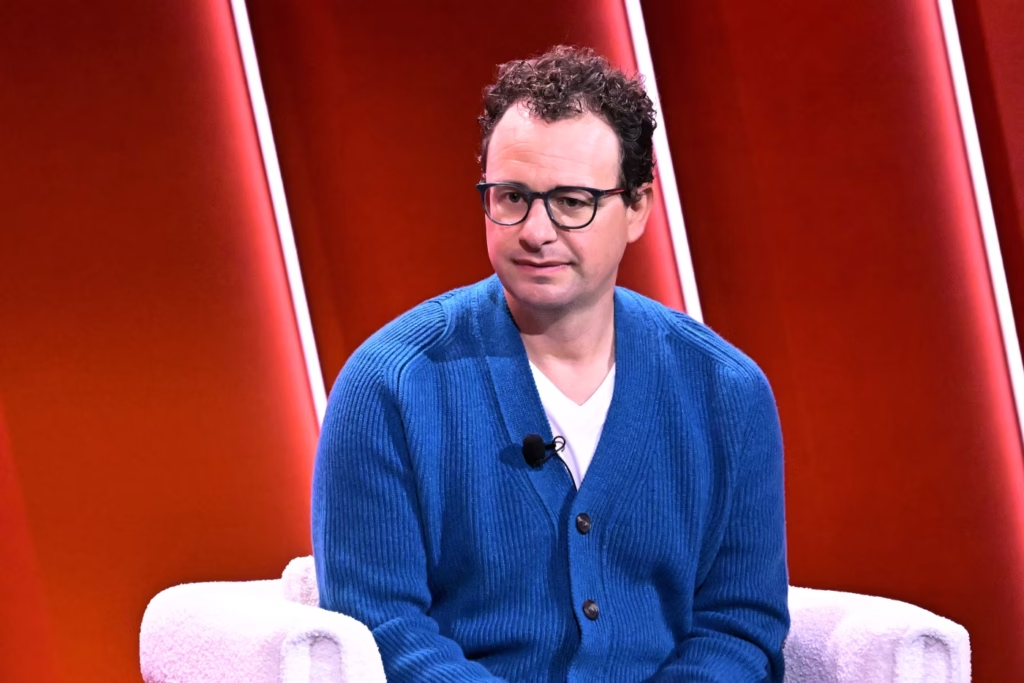
ANTHROPIC’S AMODEI: Dario Amodei, Anthropic co-founder and CEO, discusses AI developments.
Photo courtesy of The Wall Street Journal
In reaction to these predictions, Sheehan says, “A lot of it is smoke…We run toward the most clickable thing.” On the other hand, many have viewed the statement with greater concern. As Dr. Goebeler puts it, “10% is a fearful number. If you contracted a disease with a 2% risk of death, you would do anything in your power to stop it.” Whether these predictions are true or simply meant to draw attention, the uncertainty about safety with rapidly developing AI continues.
This past summer has seen both countless breakthroughs and new causes for concern in the realm of artificial intelligence, raising questions as to the fields and jobs it will reshape in the future. Ultimately, the question remains: is the possibility of rapid growth and development worth the hefty risks of an uncontrollable artificial intelligence?