Photo courtesy of uchcphiladelphia.org
As the University City Hospitality Coalition (UCHC) has provided for thousands of homeless people in Philadelphia annually for many years, EA has remained a contributor to its benefactor.
UCHC’s story began in 1984 with the death of Stanley Biddle, an unhoused man living on the streets of Philadelphia, from the cold weather. In response to this tragedy, residents, including clergymen and students from the University of Pennsylvania, gathered to create UCHC in hopes of helping the lives of the homeless in Philadelphia. As UCHC has grown from a very compact group of representatives to a community, it has demonstrated that even a small group of individuals can make a difference.
UCHC and Episcopal Academy have partnered for 35 years, with the connection originating with former Community Service Coordinator Rob Trumbull. By sending volunteers, Trumbull contributed to UCHC’s transformation from a localized volunteer project to a key supporter for improving homelessness in Philadelphia. The program teaches students empathy and leadership skills firsthand, while delivering food, warmth, and support to those they serve.
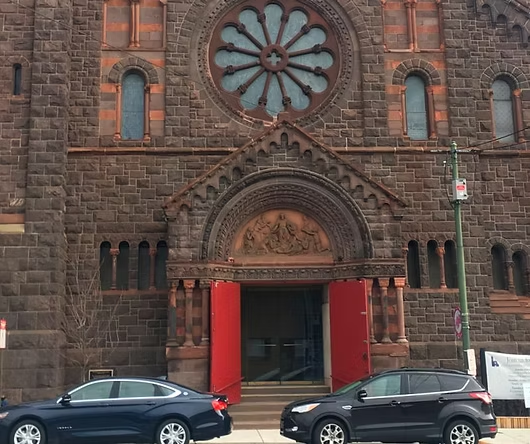
Episcopal students volunteer at various churches affiliated with UCHC in Philadelphia, where they serve meals and hot tea to those in need every Thursday, among other necessities for guests who come to the church. Their devoted service to the cause leads EA students to rise above the baseline of simply doing the service. Head Chaplain Father Timothy Gavin understands it as “not just putting food on a plate or putting a plate of food in front of someone. [Students will] actually engage and sit down and create relationships.”
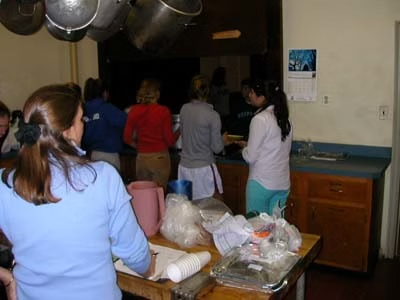
Photo courtesy of uchcphiladelphia.org
These impactful relationships, as Fr. Gavin notes, can help a guest as much as a plate of food can. He hopes students can “see the human side of hunger and the need for people to have human connection, not just a meal.”
Community Service Coordinator Amy Brotschul also describes her experience with the connections students have made with UCHC guests. She explains, “We had a real core of kids that went every Thursday, and they knew the guests’ names and the guests knew their names…and they looked forward to seeing each other, both sides.”
Brotschul recalls a student who, after graduating from EA, still volunteers while attending college: “He is at Penn as a student, and he still comes every Thursday night.” She illustrates how he played the piano for guests while volunteering, adding,“[the] legacy is awesome.”
Community service at EA also plays an important role in broadening students’ perspectives on the world around them. Community Service Board Member Arjun Kulkarni ’27 explains, “At EA sometimes you feel really bubbled in the environment of this campus. You’re doing the same thing, seeing the same people all the time.” He appreciates the opportunities EA provides to give back to the community and expand students’ perspectives. Kulkarni urges students to go out and serve their community, even if it’s new for them.
Fr. Gavin echoes these sentiments, explaining how volunteering at UCHC offers students the opportunity to learn about life outside of what they are used to and what is comfortable. He believes that it is important to volunteer at UCHC because “it gives students an opportunity to see people in a very different context, outside of Episcopal a little bit, see firsthand food insecurities that are right at our doorstep.”
Episcopal UCHC volunteers serve on Thursday afternoons, and EA is in need of more volunteers for the program. Brotschul remarks that taking the van to Philadelphia requires at least two students, which can make coordinating volunteers difficult, particularly as many students are involved in after-school sports. She encourages students to find time to come out and serve, and even if it’s only for a certain number of times, “that just makes it more special.” She adds, “I think the more consistent we are, the better the relationships that we have with the people.”
UCHC allows student volunteers to develop leadership and kindness qualities, while gaining new perspectives and forming relationships with their community in the process of giving back and serving people in need. While Fr. Gavin laments that community service isn’t required or graded at EA, he concludes, “The service itself is the reward.”