Lucas van Binsbergen ’27
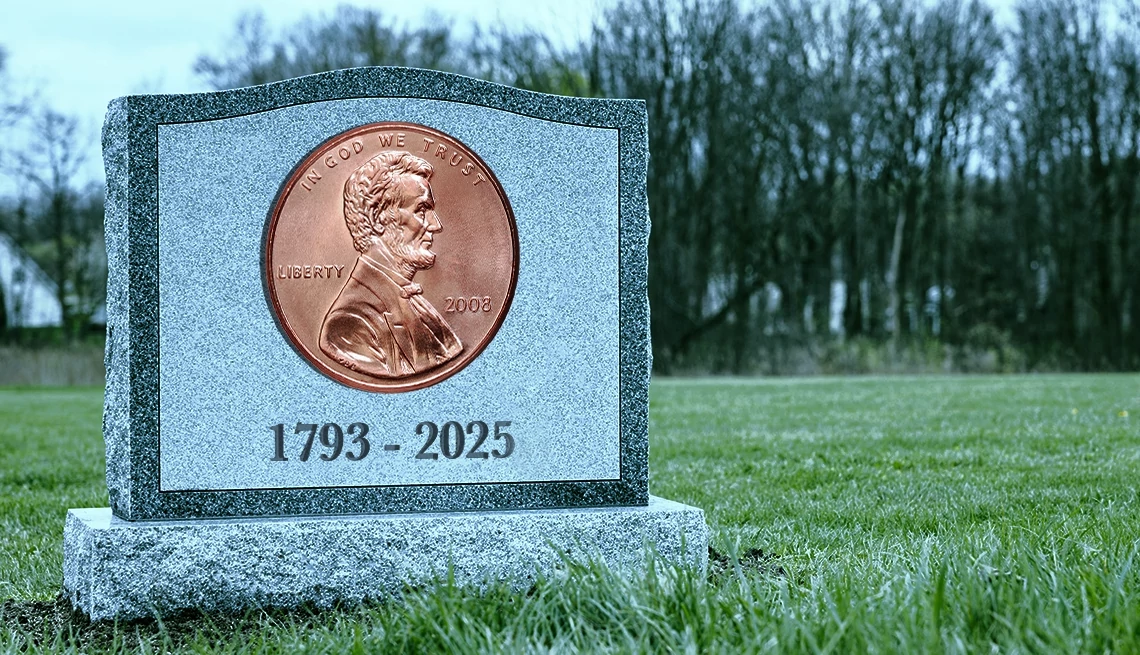
The United States penny, long the quiet backbone of cash drawers and coffee-can savings, has finally reached the end of its lifespan as an actively minted coin. After more than 230 years of service, the U.S. Mint has confirmed that it will no longer be producing new one-cent pieces—closing a chapter of American history with measured dignity rather than fanfare.
Over the last decade, the price for production of the penny, which costs over 3 cents to produce, has not resulted in a net profit. These losses have accumulated into tens of millions of dollars annually. Combined with rises in inflation hindering the coin’s purchasing power, treasury officials have made the pragmatic decision to discontinue it.
The penny has been a part of American currency for many generations. Its earliest forms did not depict historical figures, but rather symbols of the early republic. In 1909, in honor of the centennial of Abraham Lincoln’s birth, the Mint created the Lincoln cent, which was the first to depict a historical figure.
Yousuf Gilani ’28, Co-President of the Financial Literacy Club, shares his views, “I think the discontinuation of the penny would probably have a modest but positive effect in the US economy. I think eliminating the penny would save the government millions of dollars each year [because] producing a single penny actually costs more than its face value. These savings are redirected towards more productive public uses.”

years of loyal work.
Photo courtesy of Getty Images
He then adds, “Also, I think removing the penny would streamline everyday transactions. It would reduce time spent counting out nearly worthless coins and improve efficiency for both customers and businesses. Studies show that countries that have already phased out their lowest denomination coins [and engage in] rounding the price for the nearest five cents doesn’t really mean increasing costs in any meaningful way for consumers”
The penny is not the first coin to face retirement. The two-cent, which was introduced post-Civil War, was discontinued in 1873 as inflation undermined its practicality. The famous half-cent, which was commonplace in American commerce, faced the same fate less than a decade later, in 1857 for the same reasons. However, the penny’s retirement turned more heads as it circulated considerably longer.
The penny’s declining applicability is not only a result of inflation but of the prevalence of digital transactions. The majority of people no longer pay with cash let alone low-value coins. In fact, many retailers have already begun rounding prices to the near five cents.
The removal of the lowest value coin in the money system is not uniquely American either; Canada and Australia have already removed their lowest denominations and have experienced minimal disruption, which the U.S. expects as well.
While the death of the penny has been justified by pragmatism, the announcement still implies the end of an era. The penny has had other connotations ranging from childhood fountain wishing to collecting pressed souvenirs. It has had an unequivocally large impact on American culture and will be missed by many.
Taylor Wright ’11, AP Economics teacher believes that the impact of the change will be minor, saying, “I’m sure there’ll be enough pennies in circulation for a while that prices won’t immediately jump, and it probably won’t really have too much of an impact on people’s spending habits but, when’s the last time you used pennies? I use Apple Pay when I go to places. Everything’s on my phone that I don’t even bring a wallet with me half the time anymore.”
Many students agree with Wright’s assessment. “Honestly, I don’t think it’s going to have too great of an impact, even if there’s a small rounding tax,” says Asher Wan ’26, Co-President of the Economics Club.
Grace Christe ’27, President of the DECA club, says, “ I would say that the discontinuation of the penny would just go to show that there’s mass inflation in the American money system. There’s been an influx in dollars, and the value of the dollar is constantly going down. So there’s no need for the penny.”
For now, the Federal Reserve anticipates a gradual transition. Rounding policies for cash are expected to expand, while digital transactions will maintain the status quo. Pennies already in circulation may persist for decades but will slowly fade away.
In the end, the penny’s final chapter reflects its character: a small coin that left a larger imprint than its value would ever suggest. While its practical role has ended, its legacy will linger in fountains, jars, and memories across the country.