Julia Griffin ’28
Each winter, families around the world prepare to celebrate Lunar New Year, a holiday focused on rejuvenation, unity, and continued hope for the upcoming year. For communities and families across Asia, the holiday represents the start of a new lunar calendar year, and an opportunity to reconnect with friends and relatives. At Episcopal, Lunar New Year allows students and staff alike to recognize cultural traditions within the community and learn from those who celebrate them.
Widely considered the most important holiday in Chinese culture, Lunar New Year is known both for its historical roots and its emphasis on family unity. Upper School Mandarin teacher Kaiyao Ni explains, “It’s the start of a new year…people get past the hardest time of the year, and then they’re happy to celebrate and start fresh.” She continues, “It’s a time to gather with family and be excited for what’s ahead,” noting that historically, the holiday falls after the coldest part of winter, when agricultural work slows, giving families a chance to rest and celebrate.
Middle and Upper School Mandarin teacher Sophie Fu emphasizes how the holiday creates unity amongst a community while also continuing family traditions. “It’s the most celebrated and longest tradition in Chinese culture,” she says. “It represents family and friends coming together, sharing moments, and honoring meaningful traditions that have been passed down for generations.”
Some common Lunar New Year expressions include:
“新年快乐” (Xīn nián kuài lè), meaning “Happy New Year,” and “恭喜发财” (Gōng xǐ fā cái), meaning “Wishing you prosperity.”
Kelly Chan ’29 shares that her family celebrates with a traditional dinner on Lunar New Year’s Eve. “We have a big family dinner with foods like fish and turnip cake, and my brother and I give New Year greetings to our elders and receive red envelopes. We also wear the color red, as it is a symbol for good luck.” She also highlighted a common misconception: “A lot of people think that Lunar New Year is only one day, but it’s actually celebrated for 15 days. It’s sometimes just called Chinese New Year, but people all across Asia celebrate Lunar New Year.”

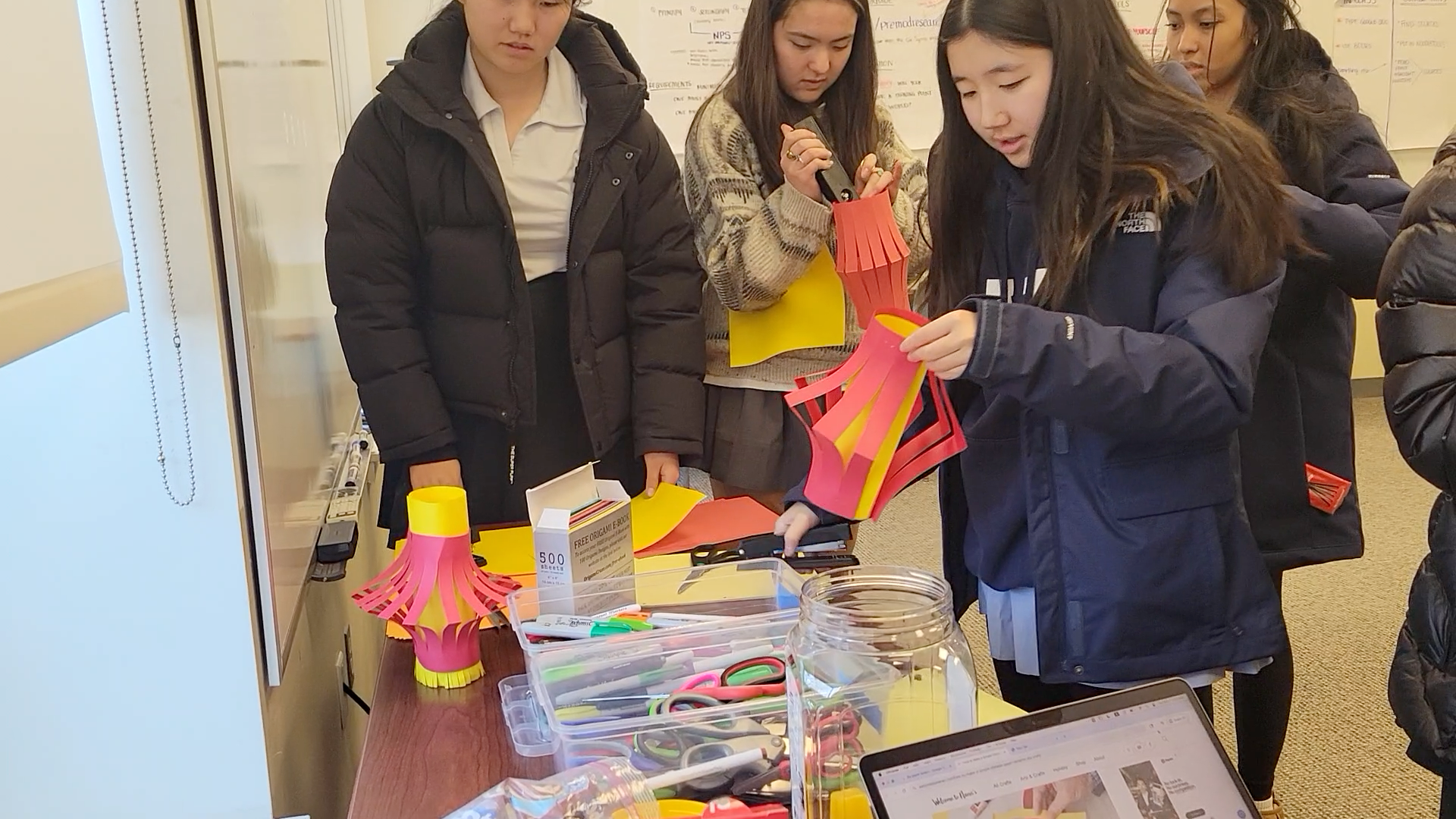
Photo courtesy of Kamau Kegler ’27
Each Lunar New Year corresponds to one of the twelve animals of the Chinese zodiac. This year marks the Year of the Horse, carrying strong and promising symbolism. Ni explains, “The horse is one of the most favorable signs…historically, people associated horses with success in war. The horse inspires people to work toward their goals and be brave.” An expression like “马到成功” (Mǎ dào chéng gōng) means “Success arrives as soon as the horse does,” which describes how progress can appear quickly when one moves boldly with confidence.
Benjamin Heo ’28 shares his interpretation of the Year of the Horse: “It means the horse doesn’t stop; it keeps going, moving forward.” Heo’s comment portrays the Year of the Horse as perseverance and forward momentum, suggesting that progress comes from continuing to move ahead despite obstacles.
Fu describes the Year of the Horse as representing achievement and speed. “It’s considered a very good year, a time for success and moving ahead,” she says. Both teachers and students who celebrate emphasize how courage, ambition, and proactivity are qualities that are especially applicable this year. In addition, the Year of the Horse can inspire students to face new challenges, whether in academics, sports, or personal goals.
For the majority of those who celebrate, Lunar New Year can also be deeply personal, as it offers time to reflect on the past year while looking ahead with optimism. At EA, the holiday is recognized through classroom lessons, songs, and decorations that allow Mandarin students and the broader community to learn about these traditions and appreciate the cultural diversity inside and outside the school.
Sophie Liu ’29 reflects on what the holiday means to her personally, saying, “ Lunar New Year is a way to restart my year; it’s a fresh beginning.” Rebecca Xu ’29 adds, “I have family gatherings with my cousins, and I FaceTime my relatives in China. It’s nice because I get to see my long-distance family and relatives.”
Fu shares her hopes for students to continue to be aware of cultural distinctions and respect traditions that may differ from their own. “I encourage students to appreciate culture and recognize that there are important traditions just like in Western culture,” she said. Ni echoes this view, adding, “A big part of what I hope students take away from this holiday is sharing the joy and spirit of this celebration with others.”Through celebrations and recognition at EA and across the world, Lunar New Year reminds the community to value tradition, appreciate worldwide culture, and welcome new beginnings. Whether it’s learning about the holiday in one of EA’s Mandarin classes or simply wishing someone “新年快乐”, the Year of the Horse encourages everyone to embrace the new year with confidence, ambition, and hope for the future.