Charlie Megosh ’28
Harrison Miller ’28

Photo courtesy of Associated Press
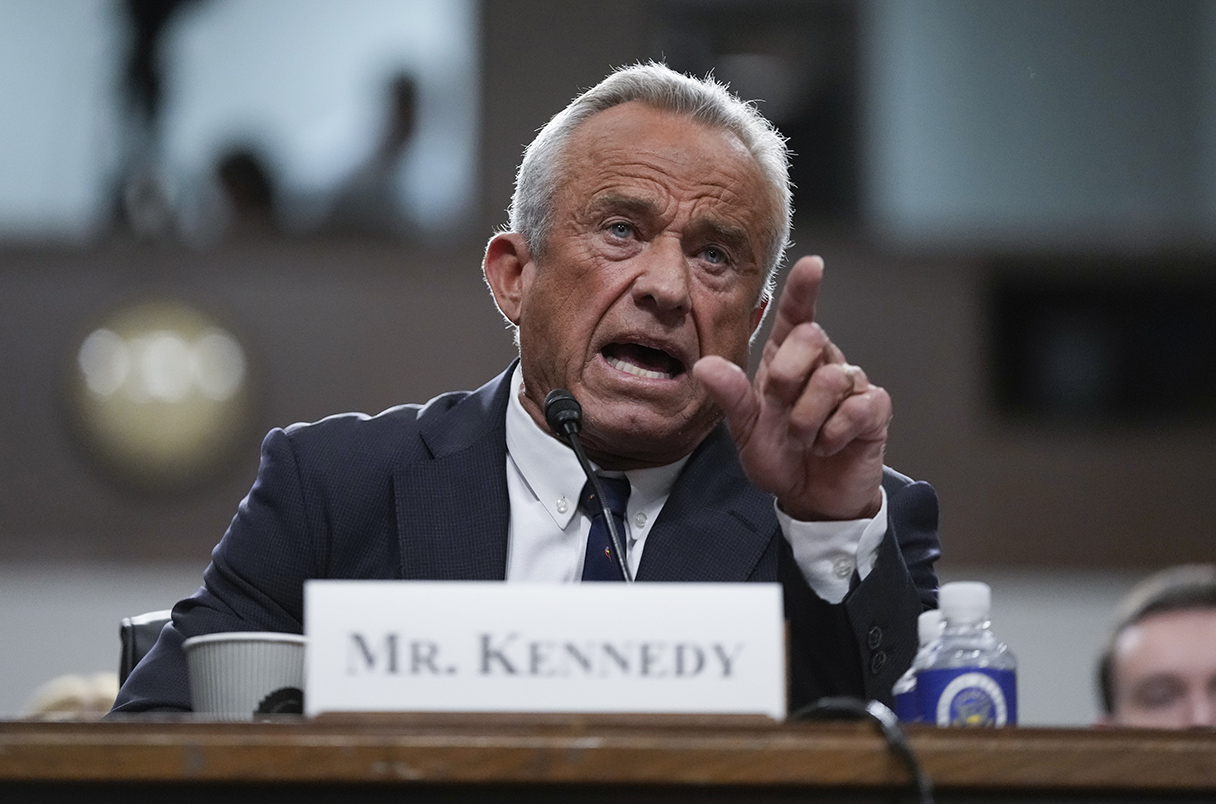
Under Robert F. Kennedy Jr.’s leadership, the Department of Health and Human Services (HHS) has implemented a number of significant policy changes. Specifically, Kennedy has initiated major reforms focused on restructuring the department, emphasizing chronic disease prevention, and changing vaccine recommendations and policies.
These policies are part of his “Make America Healthy Again” initiative, which has sparked both praise and controversy among Republicans and Democrats. Among other actions, Kennedy has proposed drastically shrinking and centralizing the HHS, recently describing it as a sprawling “alphabet soup” of agencies. Kennedy plans to merge several sub-agencies to create a new “Administration for a Healthy America,” which also involves cutting thousands of staff across the HHS, including from the CDC and FDA.
Since taking office earlier this year, Kennedy has focused on the CDC, making a host of major changes. In September, Kennedy dismissed CDC Director Susan Monarez, citing the need for “new leadership dedicated to transparency.” The White House has not yet announced her replacement.
In terms of vaccine policy, Kennedy has also removed many members of the CDC’s vaccine advisory board and revoked several vaccine recommendations, including the COVID vaccine in some cases. Each move has caused shockwaves within the medical and public health communities. Defending the moves, Kennedy argued that, “The public must know that unbiased science, evaluated through a transparent process and insulated from conflicts of interest, guides the recommendations of our health agencies.”
In response, a group of Democratic-led states, including California and Washington, have implemented their own vaccine guidelines separate from the CDC’s.
The effects of these policy changes are still reverberating, with Florida recently becoming the first state to eliminate all vaccination mandates. Jack Janczyk ’28 says that the changes “make students question what to believe about vaccines,” adding that, “it’s confusing to see government leaders disagree with doctors.” His comments showcase uncertainty among the public, which now has to deal with conflicting information from authority figures, media outlets, and scientific communities. Many public health experts have expressed concern that these decisions could lead to a resurgence of preventable diseases, while supporters argue that it represents a victory for personal freedom and parental choice.
Lower vaccination rates have led to measles outbreaks across the U.S., especially in Texas and New Mexico, with three deaths and 106 hospitalizations thus far. Infectious disease doctors are concerned that federal messaging downplays vaccination and emphasizes treatments like vitamin A, which is fueling online misinformation. John Samar ’27 commented, “The fact that measles is making a comeback showcases how ineffective the new government policy is.” In response to the measles outbreak, the government has stopped reporting cases.
Meanwhile, President Donald Trump has caused controversy by suggesting that acetaminophen (Tylenol) consumption during pregnancy may be linked to autism, citing disputed studies. Medical organizations and professionals from across the political spectrum dismiss this claim as baseless. Pharmacology PhD Heather Megosh criticizes Kennedy’s policies and Trump’s Tylenol claims, stating, “He [Kennedy] is eroding the experience within our public health department… There is no scientifically significant data suggesting that Tylenol leads to autism.”
The medical community remains divided about the totality of Kennedy’s moves. While groups like the American Academy of Pediatrics oppose the rollback of vaccine recommendations, others see Kennedy’s reforms as overdue efforts to rebuild public trust. “People have lost faith in the health establishment,” says Dr. Robert Lytle, a Pennsylvania family physician. “Even if I don’t agree with every policy, I appreciate efforts to make data more open.”
Healthcare workers are struggling to adapt. Nurses and doctors face confusion with frequent updates to vaccine guidelines and staffing shortages following federal layoffs. “We’re having to reassure parents who are suddenly questioning vaccines we’ve given for decades,” said Emily Roberts, RN, a pediatric nurse at CHOP. “It’s creating tensions in clinics and adding stress to an already stretched system.”
For some high school students, these policy shifts are causing real worries. With Florida removing vaccine mandates, many other states are debating similar moves, raising concerns about potential outbreaks in schools. At EA, opinions are mixed. “I think it’s fair that parents get to choose,” says Emma Fischer ’28. “Not everyone is entitled to trusting the government.”
The controversy over RFK and his health policies is also spreading rapidly online. Social media platforms have ignited debates about vaccines and public health across the U.S. Posts questioning vaccine safety or spreading false information with the help of AI and deepfakes have also spiked.
Despite the controversy, the chaos has reignited interest in national health policy. Many young people are beginning to pay closer attention to how HHS policies are affecting their daily lives. The changes have sparked classroom discussions, scientific research, and free thought away from following government institutions. For students who are interested in pursuing careers in medicine or public health, this moment serves as a lesson on how science and politics often collide and sometimes clash.
For students and healthcare workers, the question is no longer just about policy. It’s about who and what to believe in a rapidly changing world. As America takes control of outbreaks, misinformation, and the search for credible leadership, the nation’s health department continues to evolve, and today’s high schoolers will be living with the consequences of tomorrow.