Jack Janczyk ’28

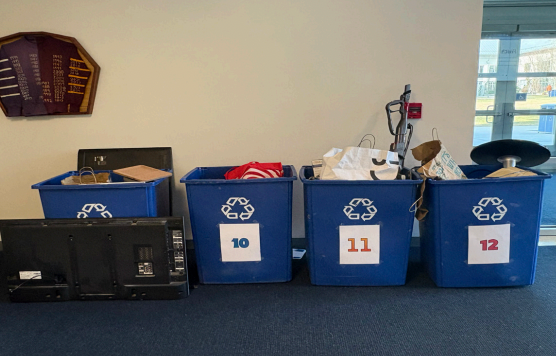
e-waste for Mason’s drive.
Photo courtesy of Mahika Ralhan ’26
In early November, as part of his Lilley Fellowship Advanced Independent Study, Mason Jiang ’26 led an electronic-waste drive at EA in an effort to recycle and dispose of electronics properly. Electronic waste, or e-waste, encompasses the disposal of any electronic or electric device. The project was a response to the growing problems posed by a lack of proper discarding of the products, which have become especially prevalent as society relies increasingly reliant on technology. Currently, the U.S. alone produces roughly 8 million tons of e-waste annually, and only 15% of it is recycled properly.
When e-waste isn’t discarded appropriately, the environmental impacts can be detrimental. Most of these electronic items end up in landfills where they do not belong, which then causes their toxic chemicals to seep into the ground, polluting the soil and even water supplies.
Unlike most environmental dilemmas such as proper disposal of other materials, e-waste recycling does not face the challenges of unwanted inconveniences and expenses. In fact, the contrary is true, for it actually has extremely lucrative incentives due to the precious metals such as gold and palladium found in the components of many devices. Moreover, the recycling of the precious metals found in the electronics is around 10 times more efficient than mining the metals from the earth, so there are financial benefits to e-waste recycling as well.
Given these advantages, it is perplexing to think that non-recycled e-waste is still a rapidly growing problem. Many, including Jiang, believe the problem has to do with ignorance as opposed to more malicious sentiments, attributing the problem to a “lack of awareness.” He also adds, “A significant portion of the population doesn’t know where to drop off e-waste, and a lot don’t even know it’s an issue at all.”
Raising awareness regarding the hazards of e-waste was a primary goal of the drive as a whole, and it seems to have succeeded. “Before hearing about Mason’s e-waste drive, I had no prior knowledge about e waste and its effects on the environment,” says Jacoby Cohen ’28, “but after hearing about this, I was really motivated to start researching the topic and how it affects my community.” Charli Chapman ’29 echoes this sentiment, sharing, “I personally didn’t even know that there was an improper way to dispose of e waste so I learned something new.”
The project was also a success statistically. In terms of data, Mason reported collecting around 200 pounds of total e-waste, dozens of pounds of otherwise wasted metals, over 100 pounds of CO2 emissions, and enough energy to charge a smartphone over 10,000 times.
Mason plans to send the waste to a plant run by Upcycle USA where it will be processed and then reused in new devices.
Mason, when reflecting upon the legacy and intention of the project, says, “The bigger impact is helping the Philly area by working towards combating electronic waste, and reducing our impact on the environment. And I think it worked really well, as lots of old cables and devices that would have otherwise ended up in landfills, are now going to be recycled, which is really nice.”
This project acts as a reminder of what Episcopal students can do with various issues, and how the actions of one individual can have greater community impact. Because of Mason’s work, awareness was raised, electronics were disposed of properly, and students gained valuable insight into the world of e-waste as well as the capability of a student who works with his community.