William Patterson ’27

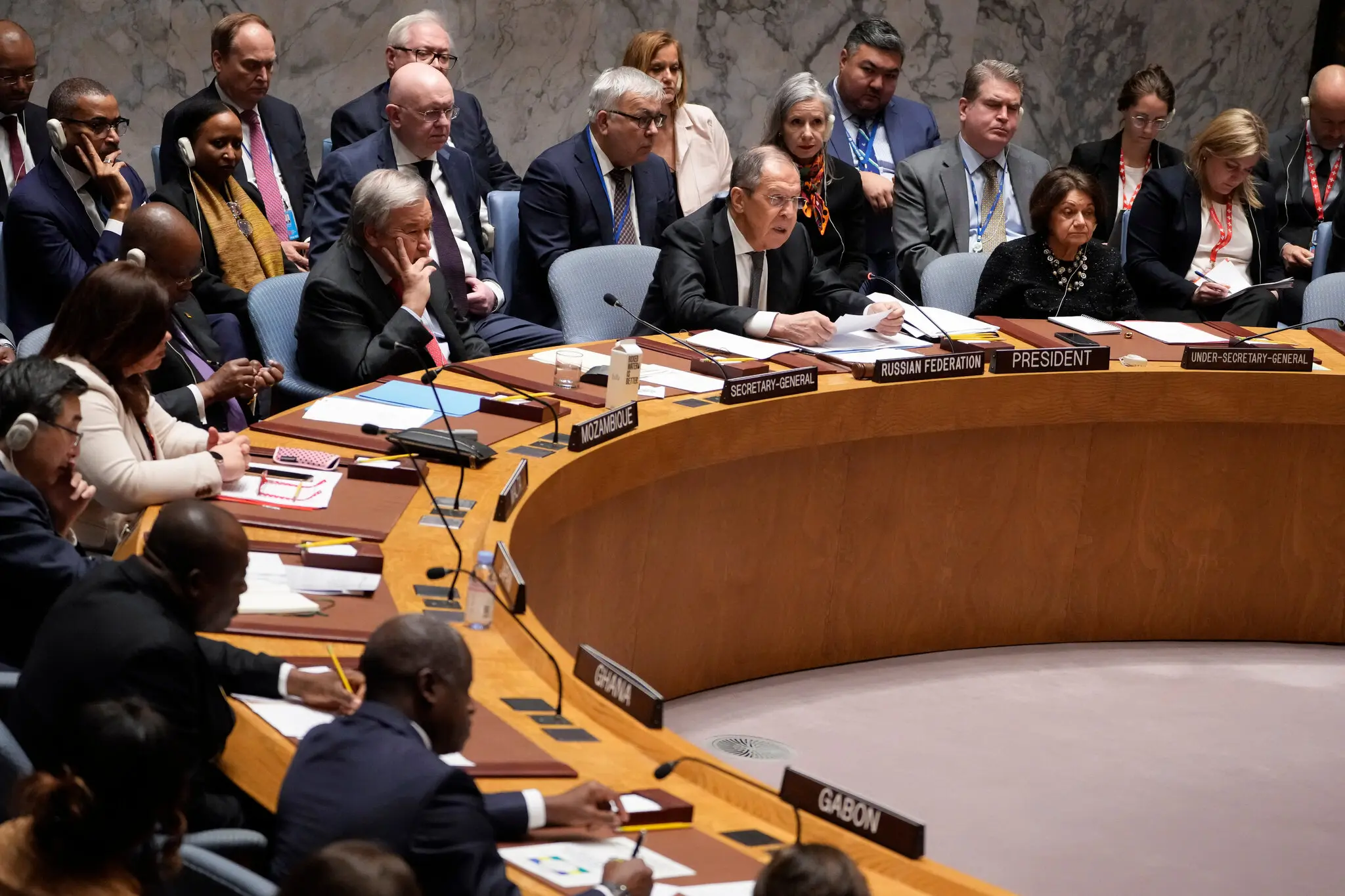
Photo courtesy of The New York Times
Over the three-quarters of a century that have passed since the Allied victory at the end of the Second World War, the United States has unarguably been the world’s sole superpower. Through military superiority, unmatched economic power, and savvy diplomacy, the United States has expanded its sphere of influence into every corner of the world and has helped structure a global order with no parallel in history. The modern era that exists today is, in part, a byproduct of the stability resulting from American hegemony, but it is equally the result of an increasingly globalized world. Regarding foreign relations, the founding of the United Nations has enabled discussion, arbitration, and accountability, giving the world a rulebook to follow for international issues. The days when nations could declare expansionist wars under false pretenses are long gone. Instead, there are implied repercussions if a nation refuses to play by the rules of the game, and some of these repercussions are far more indirect and elusive than direct punishment from international organizations. In the case of the United States, the line it walks is increasingly narrow in an era where its hegemony is waning, and the global system of order it helped create is growing increasingly emboldened. If Washington continues to pursue its current “America First” policy, it will find itself increasingly isolated from the global discussion table and decreasingly relevant on the world stage.
America’s greatest threat is not an Arctic confrontation with Russia or drug-running cartels or punitive tariffs by the international community; rather, the United States stands to lose the most by pushing the world from its own sphere of influence. In particular, demanding territorial concessions from an ally has so far only strained an increasingly tense relationship with America’s Western European allies.
The strategic benefits that the U.S. stands to gain from annexing the Danish territory of Greenland are not inconceivable. The proposition to increase deterrence against Russia and China in the Arctic is a well-founded proposal, but threatening both military force and economic punishment is a dangerous ultimatum. The United States arguably stands to gain by deterring Moscow’s encroachment in the Arctic, but it threatens to lose the backing of the world’s largest military alliance, NATO, and second-largest economy, China.
The reaction among European leaders to the demand for control of Greenland has been firmly adverse. Among the critics are British Prime Minister Keir Starmer, who has advocated that “Only Greenland and Denmark should decide the future of Greenland,” according to BBC, as well as a statement by the Norwegian Prime Minister Jonas Gahr Støre, saying, “Such threats are unacceptable and have no place among allies,” according to a press release from the Norwegian government.
If the U.S. continues to be as demanding as it has been, there is potential for disastrous economic and political consequences, asAmerica would be expelled from European markets and defense agreements. According to the Office of the United States Trade Representative, the U.S. trades roughly 1.5 trillion dollars with the European Union annually, and another 300 billion with the United Kingdom. In addition, the U.S. is a part of the world’s largest military alliance, the North Atlantic Treaty Organisation. The potential for America’s European partners to look to China for trade despite U.S. aggression, or out of fear of economic uncertainty arising from punitive tariffs, is rapidly increasing. Furthermore, the trust between Washington and its NATO allies is already frayed, due to contrasting policies on Russia’s ongoing invasion of Ukraine, among other issues, and European powers have already begun to discuss a world without American security guarantees.
A power vacuum can not exist for very long, especially when nations such as China are constantly looking for ways to undermine U.S. influence. For more than a decade, China’s Belt and Road Initiative has strived to emulate the American Marshall Plan in a 21st-century context. America’s lasting global dominance is proof of concept for its modern Chinese counterpart, and through economic infusions, Beijing aims to expand its market and power as Washington did in the post-war period. Militaristic actions such as the strikes taken against alleged cartel boats in the Caribbean and Pacific, and the toppling of the Venezuelan government, can only push irresolute nations away from America. Smaller powers that lack global sway will seek out economic and military guarantees for themselves, and China exists as a prospering alternative to the increasingly threatening American system. Many American presidents have championed strong-handed foreign policy as the solution to external affairs. The Monroe Doctrine utilized American might to prevent European imperialism, the Reagan Doctrine championed the support of anti-establishment groups and military interventionism, and Theodore Roosevelt advocated that one must “speak softly and carry a big stick.” However, when “a big stick” is threatened too often and without balance, one risks instilling fear, rather than discipline, in one’s contemporaries. If our government continues to isolate itself from the rest of the globe, it will find its influence and power increasingly challenged by its adversaries. American preeminence can not be sustained without the backing of its allies, and if solidarity is not restored among the West, the United States could find itself in a world where it no longer dictates international affairs.